Volume 32 ▶ Number 1 ▷ Number 2 ▷ Number 3 (Online First)
A note on periodic linear recurrence relations
Original research paper. Pages 1–4
József Bukor
Full paper (PDF, 173 Kb) | Abstract
Note on the irrationality of certain infinite series
Original research paper. Pages 5–14
Pavel Rucki
Full paper (PDF, 213 Kb) | Abstract
Characterizations of L-additive functions via generalized arithmetic convolutions
Original research paper. Pages 15–22
Champak Talukdar, Debashis Bhattacharjee and Helen K. Saikia
Full paper (PDF, 189 Kb) | Abstract
Computing a maximal clique of graphs of cofinite submonoids
Original research paper. Pages 23–42
Anam Shahzadi and Muhammad Ahsan Binyamin
Full paper (PDF, 312 Kb) | Abstract
 is called an
  -graph if there exists a numerical semigroup
  with multiplicity
  and embedding dimension
  such that
  and
and  In this article, we give an algorithmic way to compute the clique~number and the minimum degree of
  -graphs, where is a class of symmetric numerical semigroups with arbitrary multiplicity and embedding dimension
  . On this basis, we give some bounds for the atom bond connectivity index of graphs in terms of Randić connectivity index, the first and second Zagreb indices, the maximum and minimum degrees, and the clique number.
Construction of generalized bicomplex Leonardo numbers
Original research paper. Pages 43–51
Murat Turan and Sıddıka Özkaldı Karakuş
Full paper (PDF, 220 Kb) | Abstract
By employing this Binet-like representation, we obtain several new results, including summation formulas, d’Ocagne’s identity, Catalan’s identity, and Cassini’s identity for bicomplex Leonardo numbers. These identities not only extend classical number-theoretic properties into the bicomplex domain but also demonstrate structural consistencies across related algebraic systems. Furthermore, we establish an important connection between the Catalan and Cassini identities, revealing an intrinsic relationship that enhances the understanding of their interdependence within the bicomplex setting.
Explicit evaluation of some families of log-sine integrals via the hypergeometric mechanism and their applications
Original research paper. Pages 52–75
Shakir Hussain Malik and Mohammad Idris Qureshi
Full paper (PDF, 311 Kb) | Abstract
 , expressed in terms of multiple hypergeometric functions of the Kampé de Fériet with arguments
  and the Riemann zeta functions. As applications, we establish several mixed summation formulas (79), (81) and (83) involving the generalized hypergeometric functions
  ,
,  and
and  . Moreover, a collection of possibly new summation formulas (42), (52), (54), (56), (58), (62), (64), (66), (70), (72), (74) and (76) for multiple hypergeometric functions of the Kampé de Fériet are derived. In addition, mixed relations (80), (82) and (84) involving the Riemann zeta functions are also established.
On a family of sums of powers of the floor function and their links with generalized Dedekind sums
Original research paper. Pages 76–87
Steven Brown
Full paper (PDF, 265 Kb) | Abstract
 a nonnegative integer and
  and
and  positive integers we consider the sums
![\[\mathbf{S}_{r}(n,m):=\sum_{k=1}^{n-1}{\left\lfloor \frac{km}{n}}\right\rfloor ^r.\]](https://nntdm.net/wp-content/ql-cache/quicklatex.com-e22fcaa93961c1314062c85e0a023f56_l3.png "Rendered by QuickLaTeX.com")
While a formula for  is well known, we provide closed-form formulas for
  and
and  as well as the reciprocity laws they satisfy. Additionally, one can find a closed-form formula for the classical Dedekind sum using the Euclidean algorithm. Finally, we provide a general formula for
  showing its dependency on generalized Dedekind sums.
On certain arithmetical functions connected with the prime factorization of an integer
Original research paper. Pages 88–95
József Sándor
Full paper (PDF, 250 Kb) | Abstract
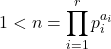 is the prime factorization of integer
  we study the arithmetical functions
![\[M(n) = \displaystyle\prod_{i=1}^r a_i^{p_i}, \quad F(n) = \displaystyle\prod_{i=1}^r p_i^{1/a_i},\quad G(n) = \displaystyle\prod_{i=1}^r a_i^{1/p_i}.\]](https://nntdm.net/wp-content/ql-cache/quicklatex.com-3cb84b7ef986a1ebacb433c3b1fa14f1_l3.png "Rendered by QuickLaTeX.com")
Determinant-preserving blind signatures from Hadamard-type t-Jacobsthal–Leonardo sequences
Original research paper. Pages 96–111
Elahe Mehraban, Reza Ebrahimi Atani, Ömür Deveci and Ghadir Golkarian
Full paper (PDF, 272 Kb) | Abstract
Diophantine equations for additive Pell numbers in Pell, Pell–Lucas, and Modified Pell numbers
Original research paper. Pages 112–119
Ahmet Emin and Ahmet Daşdemir
Full paper (PDF, 171 Kb) | Abstract
 ,
,  , where
  ,
,  , and
, and  denote the
  -th terms of the Pell, Pell–Lucas, and Modified Pell sequences, respectively. By leveraging recurrence relations, Binet’s formulas, and Carmichael’s Primitive Divisor Theorem, we provide the first complete classification of solutions to this ternary additive problem. Our results reveal several parametric and singular solutions. Furthermore, we reduce prior results to binary sums of the form
  as special instances of our framework.
Star complementary characterization of oriented graphs whose skew spectral radius does not exceed 2
Original research paper. Pages 120–132
Zoran Stanić
Full paper (PDF, 300 Kb) | Abstract
A note on the self-convolution of the Tribonacci sequence
Original research paper. Pages 133–136
Karol Gryszka
Full paper (PDF, 168 Kb) | Abstract
Padovan numbers which are concatenations of three Padovan or Perrin numbers
Original research paper. Pages 137–149
Fatih Erduvan
Full paper (PDF, 281 Kb) | Abstract
![\[ P_{k}=10^{d+l}P_{m}+10^{l}P_{n}+P_{r} \]](https://nntdm.net/wp-content/ql-cache/quicklatex.com-121f3979e6f417581e0add4cb57e751c_l3.png "Rendered by QuickLaTeX.com")
and
![\[ P_{k}=10^{d+l}R_{m}+10^{l}R_{n}+R_{r} \]](https://nntdm.net/wp-content/ql-cache/quicklatex.com-d7f2f262872db373eedd00c0861c1089_l3.png "Rendered by QuickLaTeX.com")
where  and
and  are positive integers satisfying
  . The parameters
  and denote the numbers of digits in the integers
  (or
(or  ) and
) and  (or
(or  ), respectively. The solutions to these equations can be written in the form
  for all
  and, similarly,
  ,
,  for all
  and
and  .
.
A note on generalized Zumkeller numbers
Original research paper. Pages 150–161
Jayanta Kalita and Helen K. Saikia
Full paper (PDF, 254 Kb) | Abstract
On ψ-quadratic k-tuples and their generalizations
Original research paper. Pages 162–172
Stoyan Dimitrov
Full paper (PDF, 196 Kb) | Abstract
The generalized Horadam model and the fundamental sequence of a nonhomogeneous linear recursive relation
Original research paper. Pages 173–186
Mustapha Rachidi, Irene Magalhães Craveiro and Elen Viviani Pereira Spreafico
Full paper (PDF, 301 Kb) | Abstract
On a generalization of the Hosoya triangle
Original research paper. Pages 187–197
Turhan Çifçi, Hamza Menken and Orhan Dişkaya
Full paper (PDF, 342 Kb) | Abstract
On the existence of Hamiltonian cycles in hypercubes
Original research paper. Pages 198–206
Gabriele Di Pietro and Marco Ripà
Full paper (PDF, 222 Kb) | Abstract
 and
and  , we study the existence of Hamiltonian cycles in the vertex set
  of the
  -dimensional hypercube when the Euclidean distance between consecutive vertices is fixed. Since the distance between two vertices of
  is
is  for some integer
  , the problem amounts to determining for which integers and there exists a Hamiltonian cycle whose associated Euclidean distance is . In this paper, we prove that such cycles exist if and only if is odd and
  . As a result, for all integers
  ,
,  with
with  , we provide a necessary and sufficient condition for the existence of closed Euclidean
  -leaper tours on
  chessboards, where the associated distance equals
  .
.
Two new arithmetic operations
Original research paper. Pages 207–213
Krassimir Atanassov and József Sándor
Full paper (PDF, 167 Kb) | Abstract
 are shown.
Matrix representations of an extended family of Horadam polynomials
Original research paper. Pages 214–228
Hayrullah Özimamoğlu
Full paper (PDF, 291 Kb) | Abstract
-Horadam polynomials, which is a generalization of the classical Horadam polynomials  . We derive essential characteristics of these newly defined polynomials, such as their generating function, a Binet-type expression, several combinatorial relations, and summation identities. Subsequently, we construct the infinite matrix of d-Horadam polynomials, which can be represented as a Riordan array. Moreover, by employing the Riordan approach, we establish two distinct decompositions of the infinite Pascal matrix involving the d-Horadam polynomials.
Some Fibonacci congruences with square moduli
Original research paper. Pages 229–241
Anthony G. Shannon, Peter J.-S. Shiue and Christopher Saito
Full paper (PDF, 715 Kb) | Abstract
Extremal graphs of multiplicative sum Zagreb index
Original research paper. Pages 242–253
Chunlei Xu, Guanru Li, Yiming Lei and Junming Hu
Full paper (PDF, 269 Kb) | Abstract
In Memoriam: Prof. Peter G. Anderson (1940–2025)
Editorial. Page 254
Editorial Board of NNTDM
Editorial (PDF, 330 Kb)
This volume of the International Journal “Notes on Number Theory and Discrete Mathematics” is published with the financial support of the Bulgarian National Science Fund, Grant Ref. No. KP-06-NP7/2/03.12.2025. Bulgarian National Science Fund bears no liability for the content of the published materials.