Volume 32 ▶ Number 1 ▷ Number 2 ▷ Number 3 (Online First)
On the inverse of a certain triangular matrix and its connection to the largest odd divisor
Original research paper. Pages 255–262
Sela Fried
Full paper (PDF, 196 Kb) | Abstract
 of a certain infinite triangular matrix
  is shown to be directly related to the largest odd divisor function, thus proving a conjecture of Barry. We also provide a proof of a formula for given by Yin and obtain bivariate generating functions for and .
A note on Leibniz rule for difference quotient
Original research paper. Pages 263–268
Taekyun Kim and Dae San Kim
Full paper (PDF, 161 Kb) | Abstract
Simpler congruences for Jacobi sum J(1,1)49 of order 49
Original research paper. Pages 269–280
Ishrat Jahan Ansari, Vikas Jadhav and Devendra Shirolkar
Full paper (PDF, 237 Kb) | Abstract
 (with
(with  an odd prime) were obtained by D. Shirolkar and S. A. Katre [15]. In this paper we determine congruence of Jacobi sums
  of order
  over a field
  . We also show that simpler congruences hold for in the case of artiad and hyperartiad primes.
q-Leonardo polynomials
Original research paper. Pages 281–299
Naim Tuglu, Sude Sıla Ekinci and Miraç Çetin Keskin
Full paper (PDF, 327 Kb) | Abstract
 -Leonardo Pisano polynomials and -Leonardo Lucas polynomials of the first and the second kinds, collectively termed -Leonardo polynomials. We investigate some interesting properties of the new polynomials.
Generalizing Pascal’s row sums to complex orders: A Poisson summation approach
Original research paper. Pages 300–312
Fabrizio Mancini
Full paper (PDF, 808 Kb) | Abstract
The homothetical-Hopf transformation of Pythagorean quadruples
Original research paper. Pages 313–320
Mircea Crasmareanu
Full paper (PDF, 226 Kb) | Abstract
A note on h-fold signed sumset in the set of integers
Original research paper. Pages 321–327
Mohan
Full paper (PDF, 176 Kb) | Abstract
 and
and  be positive integers, and let
  be a finite set of integers. The h-fold signed sumset, denoted by
  , is defined as
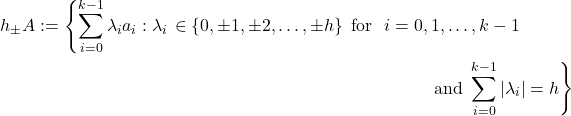
Bhanja and Pandey [J. Number Theory, 196 (2019), 340–352] gave an optimal lower bound for the cardinality of . They also characterized the set when the cardinality of attains the optimal lower bound. In this note, we revisit their results by providing new proofs. We observe that the study of obtaining the optimal lower bound for the cardinality of , and the structure of the set when attains the optimal lower bound, rather than for an arbitrary set of integers, suffices when is an arithmetic progression.
Arithmetical functions associated with divisibility sequences
Original research paper. Pages 328–334
Anthony G. Shannon
Full paper (PDF, 805 Kb) | Abstract
A proof of Spence’s formula using the reciprocity law for Dedekind sums
Original research paper. Pages 335–341
Steven Brown
Full paper (PDF, 218 Kb) | Abstract
With  being Euler’s totient function, if
  is an integer, and if

are the positive integers less than  , coprime with , then

where  is the square-free part of , and
  is the number of prime factors of .
Spence’s proof relies on an ingenious observation considering Nagell’s totient function.
Later in 1971, Lucien Van Hamme provided an alternative proof of the result using Fourier analysis and previous work from Hubert Delange in 1968. In this paper, I propose another proof of the formula using the reciprocity law for Dedekind sums. If the formula is of interest on its own, it also plays a role in the analysis of the distribution of the  as suggested by the work from Hubert Delange.
Some new inequalities for the q-gamma and related functions, II
Original research paper. Pages 342–353
József Sándor
Full paper (PDF, 274 Kb) | Abstract
-gamma function  For example, we obtain a -analogue of the famous Jordan inequality for
  for
for  Related inequalities, and other relations, such as the limit relations for the -gamma constant
  are also pointed out.
On (k,t)-Fibonacci–François numbers
Original research paper. Pages 354–373
Élis G. C. Mesquita, Francisco R. V. Alves, Eudes A. Costa
Full paper (PDF, 284 Kb) | Abstract
-Fibonacci numbers, which we call the  -Fibonacci–François sequence
  . This sequence is defined by the same -Fibonacci recurrence relation with the initial terms
 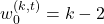 and
and  . We describe the structure of this family of sequences by providing explicit formulas and establishing several related algebraic identities. In addition, we derive a Binet-type formula, and extend several classical identities, including those of Tagiuri–Vajda and d’Ocagne, as well as some expressions for the negative indices. Furthermore, we investigate fundamental properties of this family, obtaining limit identities for the ratios of successive terms, as well as summation formulas for the partial sums of the
  -Fibonacci–François sequence.
Fibonacci numbers along residue classes and convolutions
Original research paper. Pages 374–377
Helmut Prodinger
Full paper (PDF, 154 Kb) | Abstract
 and its convolutions have (for
  ) been studied in a recent paper [3]. The instance with general is more involved and uses Chebyshev polynomials.
A combinatorial study of the generalized Leonardo polynomials
Original research paper. Pages 378–394
Mark Shattuck
Full paper (PDF, 268 Kb) | Abstract
 denote the sequence satisfying the recursion
  for
for  , with
  and
and  , where
  ,
,  and
and  are arbitrary. The
  are referred to as generalized Leonardo polynomials. In this paper, we provide a combinatorial interpretation for
  as a weight function on a certain class of linear tilings wherein the initial tiles are colored according to their type. We use our interpretation to provide combinatorial explanations of some identities for which were previously found by various algebraic methods. Further, we are able to establish by combinatorial arguments several new identities for , among them, formulas for various sums of products and a Cassini-like relation.
![K[x_1,...,x_n]](https://nntdm.net/wp-content/ql-cache/quicklatex.com-cc73b7acd3944d8377863fe053756fd0_l3.png "Rendered by QuickLaTeX.com") -algebras of multivariate polynomial heart-based rhotrix sets
-algebras of multivariate polynomial heart-based rhotrix sets
Original research paper. Pages 395–429
Joel Nathaniel B. Pondoc and Aljean Faye P. Lobitaña
Full paper (PDF, 460 Kb) | Abstract
denote the sequence satisfying the recursion for , with and , where , and are arbitrary. The are referred to as generalized Leonardo polynomials. In this paper, we provide a combinatorial interpretation for as a weight function on a certain class of linear tilings wherein the initial tiles are colored according to their type. We use our interpretation to provide combinatorial explanations of some identities for which were previously found by various algebraic methods. Further, we are able to establish by combinatorial arguments several new identities for , among them, formulas for various sums of products and a Cassini-like relation.
A bound for repeated binomial coefficients having large prime power factors
Original research paper. Pages 430–438
Zachary King and R. Scott Williams
Full paper (PDF, 390 Kb) | Abstract
 is an integer, we let
  denote the number of ways of expressing
  as a binomial coefficient. We illustrate a method of bounding by utilizing properties of Pascal’s Triangle under modular arithmetic. We use this method to show that is bounded for with proportionately “large” prime power factors, and we describe how it may be possible to derive stronger bounds.
An extension of Dedekind’s arithmetic function
Original research paper. Pages 439–450
Krassimir Atanassov
Full paper (PDF, 233 Kb) | Abstract
Book review: “Mathematical Analysis for Sciences and Engineering: Analysis of Sequences, Numerical Series, Mathematical Functions, Asymptotic Analysis”
Book review. Pages 451–452
Anthony G. Shannon
Book review (PDF, 457 Kb)
Book review: “Algebra and Discrete Mathematics for Economics: Numbers, Graphs and Matrices in Input-Output Economics”
Book review. Pages 453–454
Anthony G. Shannon
Book review (PDF, 379 Kb)
This volume of the International Journal “Notes on Number Theory and Discrete Mathematics” is published with the financial support of the Bulgarian National Science Fund, Grant Ref. No. KP-06-NP7/2/03.12.2025. Bulgarian National Science Fund bears no liability for the content of the published materials.